How to Use a Stone Mortar for Balinese Pastes
A practical technique guide for authentic results at home
Mortar technique for cohesive spice pastes: order of ingredients, pounding rhythm, and texture targets.
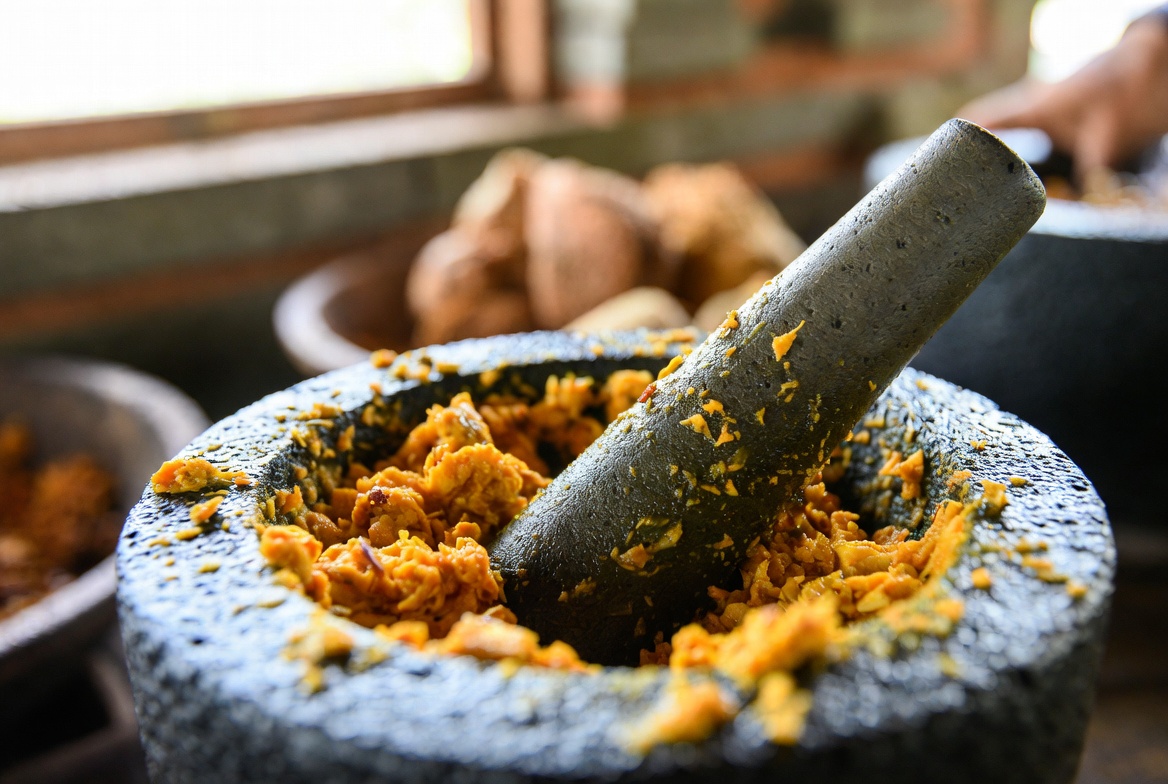
Why this technique matters
Mortar technique for cohesive spice pastes: order of ingredients, pounding rhythm, and texture targets.
Step-by-step
- Stabilize mortar on a damp cloth.
- Start with harder dry spices and nuts.
- Add rhizomes and chilies gradually.
- Finish with softer aromatics until sticky.
- Scrape sides often for even texture.
Mistakes to avoid
- Overfilling the mortar
- Wet, soupy paste
- Inconsistent chunk size
Want to practice this with your hands on the mortar? Start at the cooking class Bali hub, then book an in-villa session via myCHEF cooking class.
Related guides
How to Make Base Genep Step by Step
A practical technique guide for authentic results at home
Balinese Cooking Techniques
Mortar pounding, banana-leaf wrapping, slow spice cooking, and fire methods

How Much Does a Cooking Class in Bali Cost? (2026)
Group, private, in-villa, and resort bands — what the headline price hides, and how to get an all-in quote
Is a Cooking Class in Bali Worth It?
When paste literacy beats a US$3 warung lunch — and when you should skip the class
Private Chef or Cooking Class in Bali? How to Choose
A chef who cooks for you versus a chef who teaches you — cost per group, villa logistics, and when to book both
Base Genep (Basa Genep): Bali’s Complete Spice Paste Guide
Ingredients, practical ratios, mortar vs blender, frying cues, storage, and the dishes it unlocks