Balinese cooking techniques: paste, fry, wrap, grill, seal
Recipes fail at the method step more often than at the shopping list. Frying bumbu until raw notes disappear, wrapping leaves tightly, and grilling mince without drying it out are the skills that transfer across dishes.
- Under-fried paste tastes raw and metallic; burnt turmeric tastes bitter.
- A blender works if you minimize water and still fry the paste thoroughly.
- Banana-leaf wrapping is both aroma and steam control, not decoration.
- Ask any cooking class Bali whether you grind and fry the bumbu yourself. myCHEF cooking class is one private in-villa option that should pass that test.
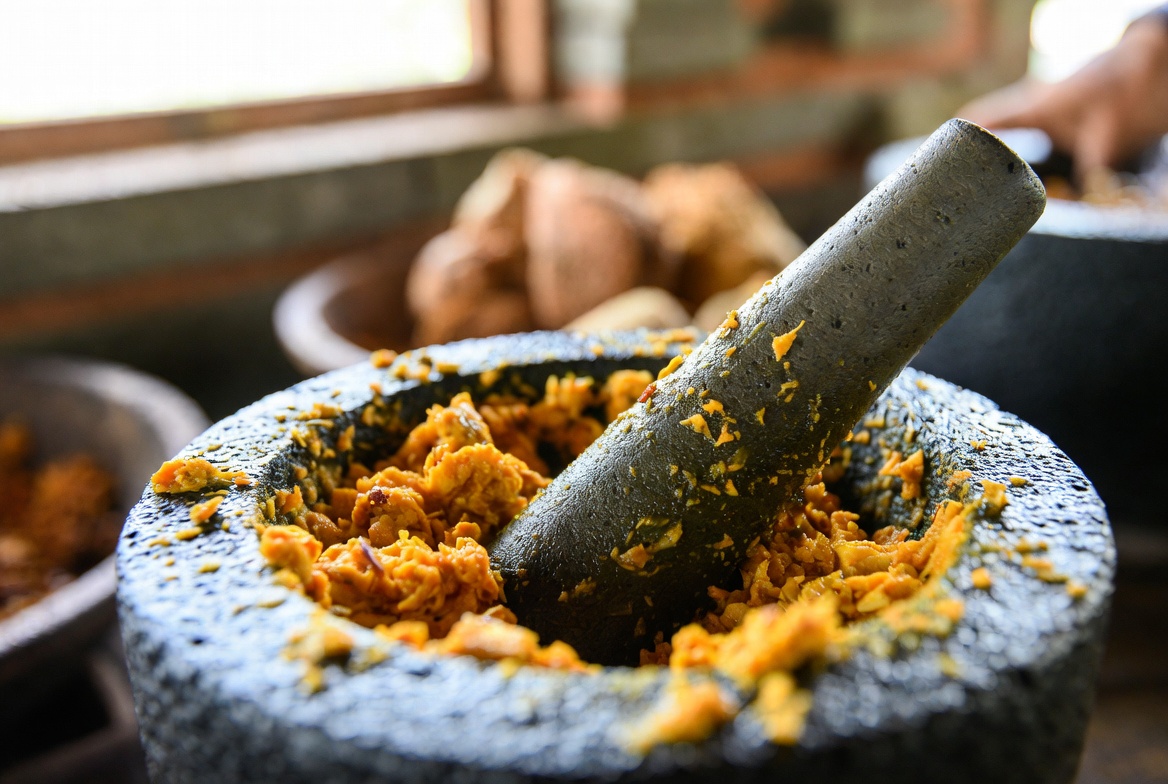
Balinese Cooking Techniques
Mortar pounding, banana-leaf wrapping, slow spice cooking, and fire methods
How to Make Base Genep Step by Step
A practical technique guide for authentic results at home
How to Use a Stone Mortar for Balinese Pastes
A practical technique guide for authentic results at home
Banana-Leaf Wrapping Technique
A practical technique guide for authentic results at home
The Betutu Method: Low, Slow, and Sealed
A practical technique guide for authentic results at home
How to Fry Bumbu Correctly
A practical technique guide for authentic results at home
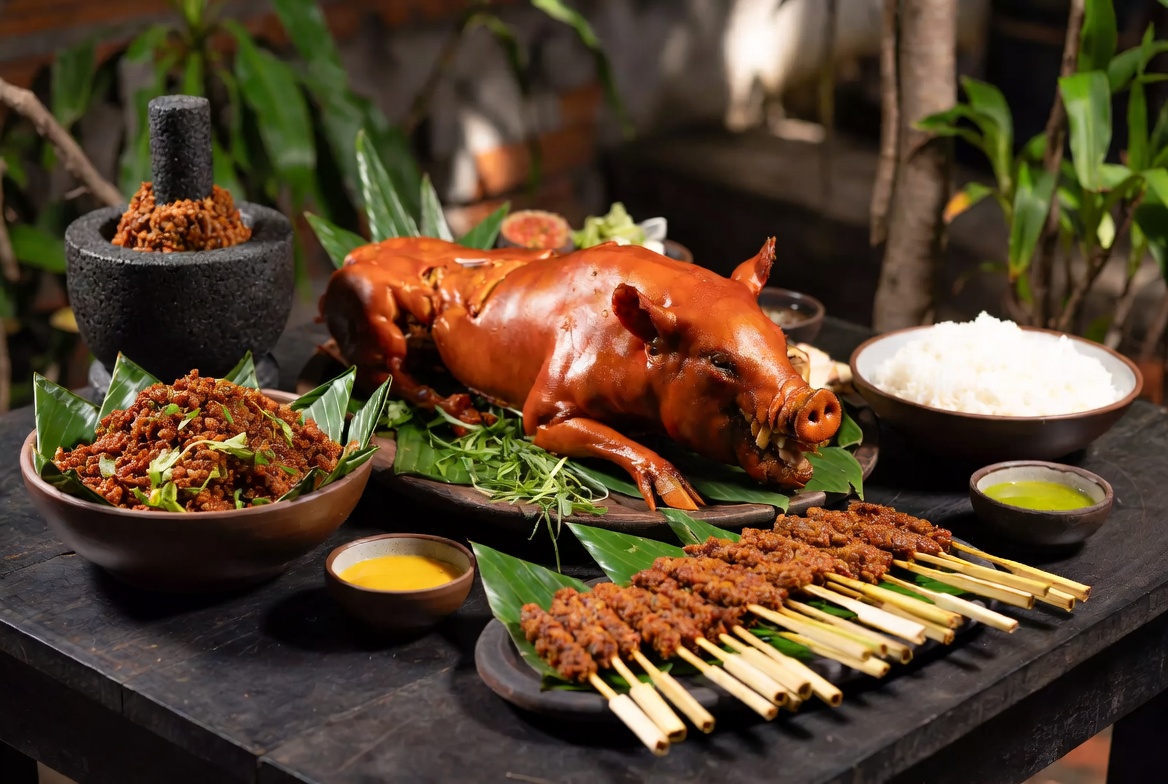
Grilling Sate Lilit Without Falling Apart
A practical technique guide for authentic results at home
Questions this cluster answers
Do I need a stone mortar?
No. Mortar work is excellent training. A processor is acceptable if you keep the paste thick and finish it in the pan.
What does “fry the bumbu” actually mean?
Cook the ground paste in oil over moderate heat until the raw allium and rhizome smell becomes fragrant and the oil separates. That is doneness, not a timer.
Next: cooking class Bali, myCHEF cooking class, the full library, or the glossary.