Balinese Cooking Techniques
Mortar pounding, banana-leaf wrapping, slow spice cooking, and fire methods
Balinese recipes fail more often from technique than from missing a rare herb. Paste undercooked, chili burned, leaf wraps leaking, grill too aggressive — these are the usual culprits. This pillar organizes the core methods you will reuse constantly.
Technique is flavor
Balinese recipes fail more often from technique than from missing a rare herb. Paste undercooked, chili burned, leaf wraps leaking, grill too aggressive — these are the usual culprits. This pillar organizes the core methods you will reuse constantly.
Pounding and blending
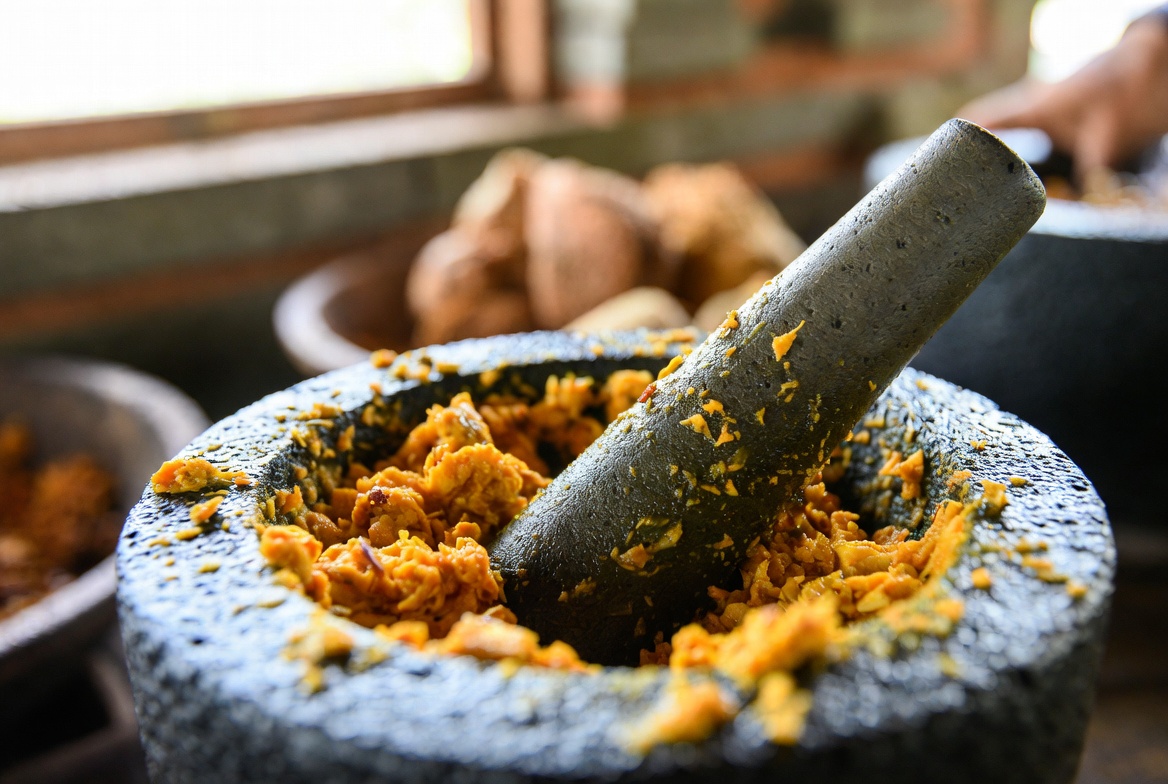
Stone mortar work creates elastic, oily pastes. Blenders need less water and more patience in the pan afterward. Either path can work if the final cooked paste is fragrant and cohesive.
Cooking the bumbu
Fry paste over medium heat, stirring often. You want steam to smell aromatic, not acrid. Oil separating is a positive sign. Add protein or coconut milk only after this stage.
Leaf wrapping and parcel cooking
Banana leaves protect, perfume, and steam. Soften leaves over flame or hot water so they do not crack. Double-wrap valuable parcels. Secure with toothpicks or leaf ribs.
Fire and smoke
Sate lilit wants steady glowing heat, not raging flame. Babi guling knowledge centers on even rotation and skin drying. Home cooks can approximate with oven roasting plus a final high-heat finish for texture.
Want to practice this with your hands on the mortar? Start at the cooking class Bali hub, then book an in-villa session via myCHEF cooking class.
Related guides
How to Use a Stone Mortar for Balinese Pastes
A practical technique guide for authentic results at home
Banana-Leaf Wrapping Technique
A practical technique guide for authentic results at home
How to Make Base Genep Step by Step
A practical technique guide for authentic results at home
The Betutu Method: Low, Slow, and Sealed
A practical technique guide for authentic results at home
How Much Does a Cooking Class in Bali Cost? (2026)
Group, private, in-villa, and resort bands — what the headline price hides, and how to get an all-in quote
Is a Cooking Class in Bali Worth It?
When paste literacy beats a US$3 warung lunch — and when you should skip the class